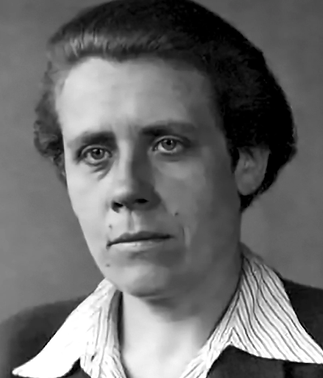
Hilde Radusch
(November 6, 1903 - August 2, 1994)
Hilde Radusch was a lesbian activist and anti-fascist who resisted both Nazism and political repression throughout her life. A committed communist in Weimar Germany, she was arrested by the Nazis in 1933 for her political organizing. During the Nazi era, Radusch and her partner secretly aided Jews and political dissidents through their Berlin restaurant. After the war, she became a leading figure in Germany’s lesbian activist movement and worked to preserve lesbian history and memory.
*****
This page tells the story of one person. Read this introductory essay for an overview of the history of the Nazis' persecution of LGBTQ+ people.
This essay was researched and written by Charlotte Nicely, the Pink Triangle Legacies Project’s 2025-2026 Public History intern in partnership with the Zucker/Goldberg Center for Holocaust Studies at the College of Charleston. It is based on the important research of and valuable feedback from Dr. Claudia Schoppmann. Thank you for your work in preserving queer history.
Hilde Radusch was born on November 6, 1903 near Stettin (today Szczecin in Poland) into a bourgeois-conservative, non-Jewish family. Beginning in 1913, she attended a lyceum for girls in Aschersleben and later in Weimar. She then spent a year at a boarding school intended to prepare her for marriage and domestic life, a future she rejected. Her father, a postal civil servant, died in the First World War in 1915. Radusch later identified this as formative for both her emotional independence and her strained relationship with her mother. Hilde gained a lot from her father before his passing: his strong sense of independence, a spirit of determination, and training in firearms. She struggled to fit into the role that society demanded of women at the time. Later in life, she reflected, “I never felt like a woman - but don't ask me what else I felt like.” This sense of distance from prescribed femininity shaped her personal relationships and her political orientation.
At the age of 18, Hilde moved to Berlin, seeking both physical distance from her mother and greater social freedom. She trained as a childcare worker at the Pestalozzi-Fröbel Institute, and in the same year joined the Communist Youth Association. After failing to secure permanent employment in childcare, she took a position as a telephone operator at the postal service in 1923. It was a workplace full of young, unmarried women. Hilde felt that it was, “A respectable job, not all too much money, but something for life.” It was there that she met her first long-term girlfriend, Maria. They soon moved in together. Hilde found herself truly happy for the first time.
Radusch’s political career developed rapidly within the structures of the Communist Party of Germany (KPD). She took a leading role in the Red Women's and Girls' League, trained women for demonstrations, spoke at party events, and wrote articles for Women’s Watch. Through these organizations, she became known for her commitment to women’s and workers’ rights. In 1929 she was elected as a KPD representative to the Berlin city council, serving until 1932.
Her position within the party was never secure. As an openly lesbian and self-assertive woman, she sometimes clashed with party officials. When Hilde refused to comply with sexualized demands from her supervisors, for example, party leaders tried to limit how far she could rise in the party.
Now the cold days are coming
The test
The country holds its breath
-First Frost (excerpt), Hilde Radusch
As the Nazi party came to power in 1933, Hilde feared for her safety as a well-known communist. But her fighting spirit pushed her to set up illegal communication networks. She was caught and arrested by the Nazis on April 6, 1933. She had already moved out of her apartment to try to protect her girlfriend Maria. “There was no future for our relationship,” Hilde later recalled, “since Maria suddenly hated communists.”
Hilde had a secret affair while in prison, which she felt was necessary to help herself make it through her imprisonment. After her release, she remained under Gestapo surveillance and struggled to secure stable employment. Between 1934 and 1939, she remained active in resistance networks, secretly distributing anti-Nazi leaflets. She found affirmation in her resistance activities. “In a certain way we felt like heroes since being imprisoned by the Nazis ‘acknowledged’ us as political opponents.”
In 1939, Hilde met her neighbor, Else “Eddy” Klopsch, who became her life partner. They attempted to open a restaurant together. The permit request from Eddy was initially denied due to Hilde’s “political unreliability,” but Eddy fought for the permit. In 1941 the restaurant opened under the name of Eddy’s father to disguise Hilde’s participation. Hilde and Eddy ignored the rules when they could. The Nazis mandated that businesses display a “No Jews Allowed” sign. Hilde and Eddy placed it directly behind the menu, where it could not be seen. The restaurant became a refuge for women who had been released from prison or were living in hiding. Despite the antisemitic ordinances, Hilde and Eddy continued to serve Jews in their restaurant, too.
In August 1944, Hilde fled Berlin to Prieros, a village in the vicinity of Berlin, when she was warned that the Gestapo were preparing to arrest political opponents. Eddy joined her shortly afterwards, and the couple lived for several months without ration cards, largely isolated and close to starvation. While there, Hilde wrote an extensive diary, in which he documented daily life under illegality, hunger, fear, and the physical and psychological collapse of her partner. She also reflected on the course of the war and on the political responsibilities of the future.
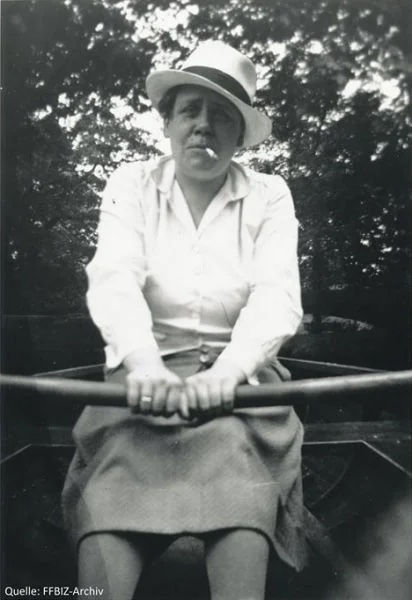
FFBIZ - The Feminist Archive
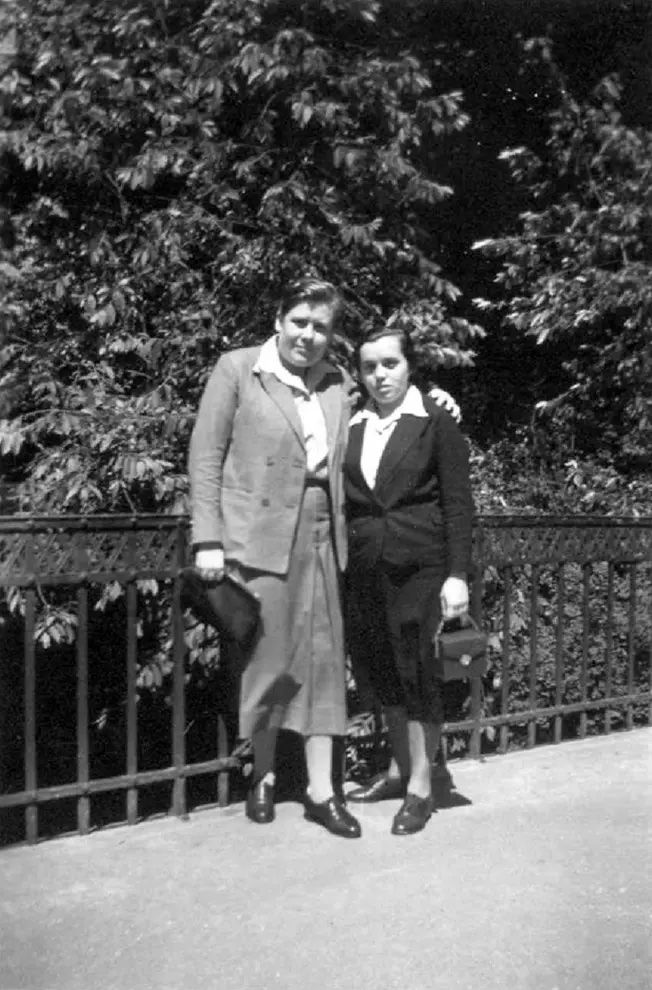
FFBIZ - The Feminist Archive
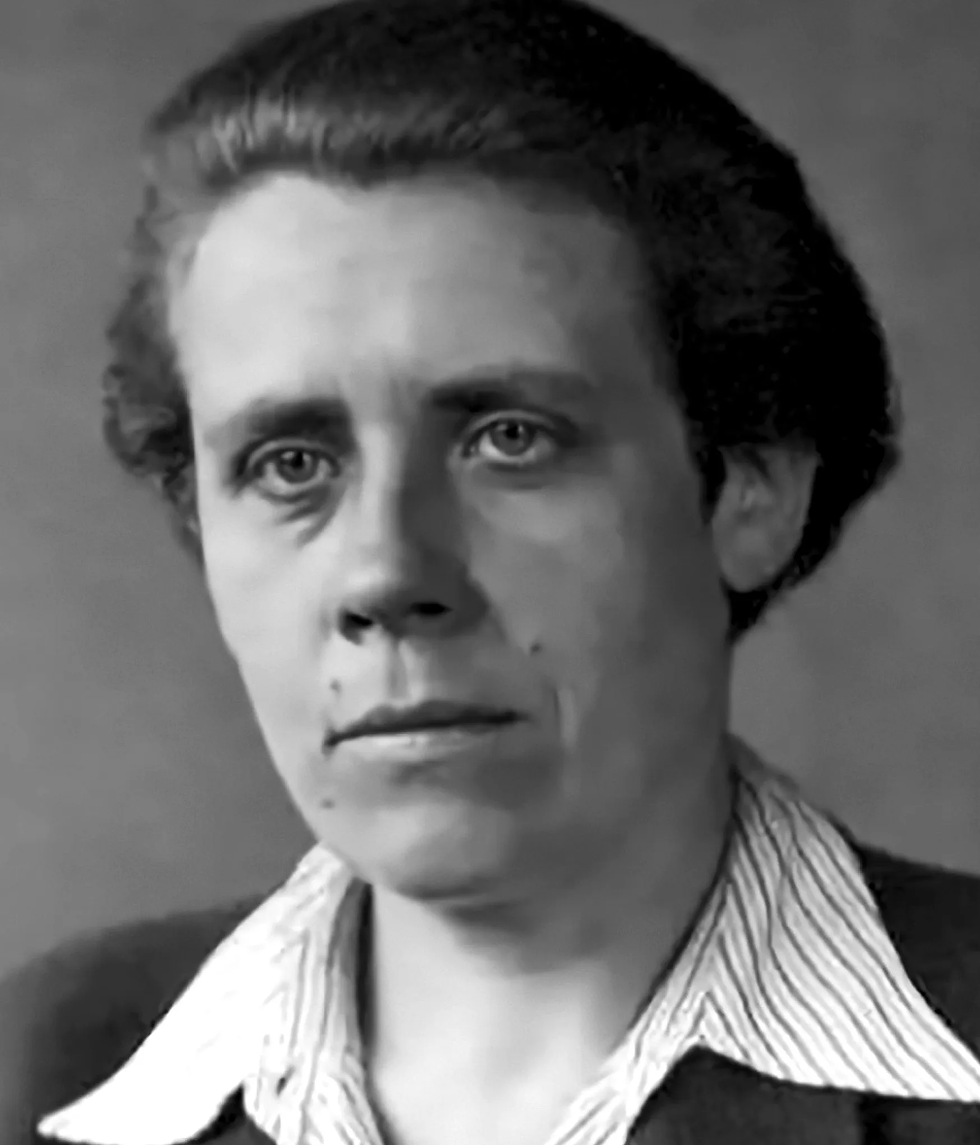
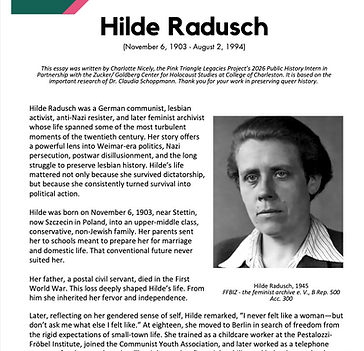
FFBIZ - the feminist archive e. V., B Rep. 500 Acc. 300
FFBIZ - The Feminist Archive
After the end of the war, the couple returned to Berlin and Hilde immediately participated in reconstruction efforts. She worked in the Schöneberg district office in the department for “Victims of Fascism” and helped organize aid for returning prisoners and war orphans. She began to have doubts about the politics and developments of the Communist Party of Germany (KPD)and wondered “Can the goal of socialism be achieved via a bad totalitarian path? Does the end truly justify the means?” She decided to quit the party. Party leadership felt scorned and expelled her from the party in January of 1946. They blamed her relationship with a woman and slandered her name to the district offices. In February she was fired from her job.
Disillusioned but not defeated, Hilde later joined the Social Democratic Party (SPD) and stayed in West Berlin. Eddy operated a secondhand shop that supported them both financially until she died of cancer in 1960. Hilde was devastated.
You slept
And no longer will I
Hear the steps
That I awaited
Not the voice
And not your laugh
You went
And left me
Alone.
To freeze, lonely…
“You Went,” by Hilde Radusch (1978)
Beginning in the late 1960s, Hilde increasingly turned toward writing and reflection, producing poems and autobiographical texts that critically examined her own political past and the silence surrounding lesbian persecution under Nazism. In the 1970s, younger activists sought out Radusch’s experiences as a historical resource. Her correspondence with writers and activists such as Pieke Biermann reveals sustained debates about discrimination, resistance, and the complexity of everyday life under dictatorship.
In November 1974, she co-founded the Berlin lesbian group L74 together with Käthe Kuse, Tamara Streck, and Gertrude Sandmann. The group explicitly addressed older lesbians who felt marginalized within student-dominated lesbian and feminist initiatives. L74 edited the magazine Unsere Kleine Zeitung, the first lesbian periodical in Germany after 1945, which sought to reconnect younger activists with what its editors called their “historical sisters” from the 1920s.
Hilde’s activism no longer centered on party politics but on the creation of historical continuity within lesbian communities. This commitment to memory work was further institutionalized in 1978 when she became one of the founding members of the Frauenforschungs-, -bildungs- und -informationszentrum (FFBIZ), one of the first feminist and lesbian archives in Germany.
Until her death on August 2, 1994, Radusch was cared for in her apartment by a circle of younger lesbian activists whom she referred to as her “Club.” Since 2012, memorial plaque in Berlin-Schöneberg have commemorated her as one of the first publicly recognized lesbians persecuted under Nazism. In 2016 her grave was designated an honorary grave of the city of Berlin. She continued to write poetry until she passed away. In the end she summed up her life better than anyone else possibly could: “I never saw myself as a ‘victim,’ but always as a fighter.’”
Sources & Further Reading
Meusen, I. Unacknowledged Victims: Love between Women in the Narrative of the
Holocaust. An Analysis of Memoirs, Novels, Film and Public Memorials. (Doctoral
Dissertation, 2015). Retrieved from https://scholarcommons.sc.edu/etd/3082
Rottermann, Andrea. Queer Lives across the Wall: Desire and Danger in Divided Berlin,
1945–1970. University of Toronto Press, 2023. http://www.jstor.org/stable/10.3138/jj.2960283.
Schoppmann, Claudia. “Biografische Skizzen - Hilde Radusch.” Lesbengeschichte, December 16, 2005. https://www.lesbengeschichte.org/bio_radusch_d.html.
Schoppmann, Claudia. Days of Masquerade: Life Stories of Lesbians during the Third Reich. Columbia University Press, 1996.
Viebig, Annika. “Hilde Radusch.” Text. Digitales Deutsches Frauenarchiv, July 9, 2018.
https://www.digitales-deutsches-frauenarchiv.de/akteurinnen/hilde-radusch.
For Citation
Charlotte Nicely, "LGBTQ+ Stories from Nazi Germany: Hilde Radusch." (2026) pinktrianglelegacies.org/radusch
(Updated May 2026)